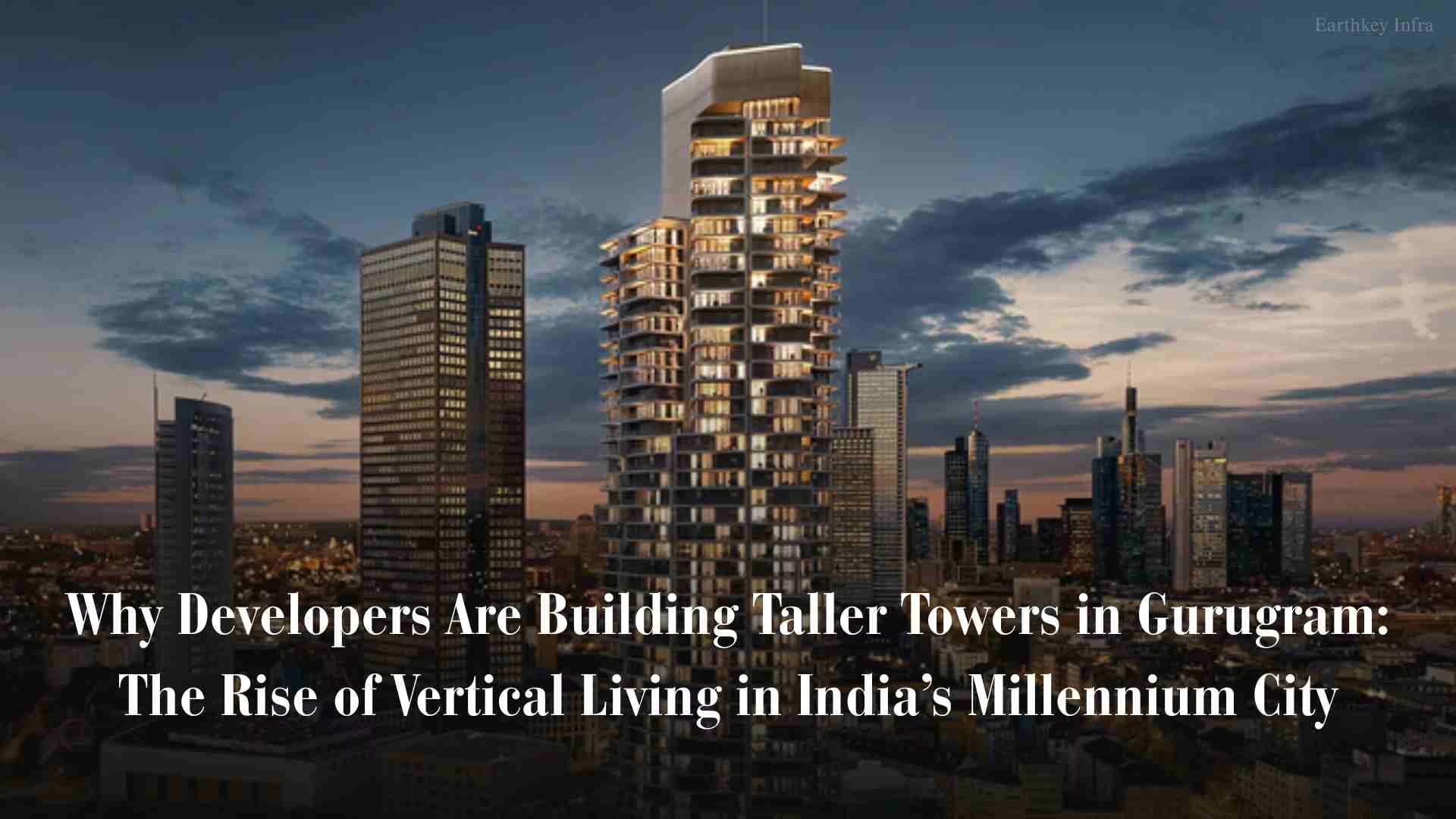
Why Developers Are Building Taller Towers in Gurugram
If you’ve driven through Gurugram recently, you’ve probably noticed something interesting — the skyline looks dramatically different. Taller buildings, glass façades, and luxury high-rises are steadily replacing older mid-rise apartments. Instead of spreading outward like before, the city is now rising upward.
This shift isn’t accidental. Nor is it just a design trend.
In fact, the growing number of tall towers is a calculated response to changing land economics, modern lifestyle demands, evolving government policies, and strong investor interest. Over the last decade, Gurugram has quietly transformed into India’s most prominent hub for vertical living — often compared to global cities like Singapore or Dubai.
As someone who has closely tracked NCR real estate for years, I can confidently say this: high-rise living is no longer the future — it’s already the present.
So, let’s break down exactly why developers are building taller towers across Gurugram.
Quick Info Table
| Factor | Details |
|---|---|
| Trend | Vertical high-rise developments |
| Key Locations | Dwarka Expressway, Golf Course Road, SPR, New Gurgaon |
| Main Reasons | Land scarcity, luxury demand, higher FAR, better ROI |
| Buyer Type | HNIs, NRIs, professionals, investors |
| Benefits | Views, amenities, appreciation |
| Property Type | Premium apartments & mixed-use towers |
1. Limited Land Availability Is Pushing Vertical Growth
To begin with, land scarcity is the biggest trigger.
Prime locations such as Golf Course Road, Dwarka Expressway, Southern Peripheral Road (SPR), and Cyber City are nearly saturated. Large horizontal land parcels are becoming rare and extremely expensive. Consequently, traditional low-rise projects no longer make financial sense for developers.
So what’s the practical solution?
Instead of expanding outward, developers are choosing to build upward.
By constructing taller towers, they can:
Fit more homes on the same plot
Optimize rising land costs
Increase project viability
Maintain profitability
Deliver more inventory without expanding city limits
Therefore, vertical development allows smarter use of every square foot while keeping prices competitive.
2. Connectivity Corridors Encourage High-Rise Projects
At the same time, infrastructure upgrades have completely changed Gurugram’s growth story.
Today, the city enjoys:
Seamless access to Delhi
Rapid Metro connectivity
Upcoming metro extensions
Completion of Dwarka Expressway
Close proximity to IGI Airport
Wide arterial roads
Naturally, better connectivity pushes property demand higher.
Because of this, developers strategically launch premium high-rise projects near transit corridors where buyers are willing to pay more for convenience and reduced travel time.
Simply put, when mobility improves, real estate goes vertical.
3. Luxury Living Demand Is at an All-Time High
Meanwhile, the buyer profile has evolved significantly.
Earlier, most homebuyers were families looking for practical housing. However, today’s market includes:
Corporate leaders
Entrepreneurs
NRIs
HNIs
Global executives
Startup founders
These buyers expect more than just four walls. Instead, they look for experiences and exclusivity.
They demand:
Sky decks
Clubhouses
Infinity pools
Private elevators
Smart homes
Concierge services
Golf-course or city views
Hotel-style amenities
Clearly, such features are easier to design within vertical communities.
As a result, luxury high-rises with 35–50+ floors are selling much faster than traditional low-rise housing formats.
4. Higher Floors Mean Higher Returns for Investors
Interestingly, taller towers are not just about lifestyle — they’re also about profitability.
Apartments on higher floors typically command:
Better resale value
Higher rental yields
Faster appreciation
Greater buyer demand
Why does this happen?
Because buyers prefer:
Unobstructed views
Reduced traffic noise
Better sunlight and ventilation
Greater privacy
A prestige factor
Consequently, investors see stronger ROI.
Developers, in turn, price upper floors at a premium, which increases overall project margins. In short, it’s a win-win situation for both buyers and builders.
5. Government Policies & FAR Benefits
Another crucial driver is policy support.
Urban planning regulations have become more flexible over the years. Authorities now permit:
Increased Floor Area Ratio (FAR)
Transit-Oriented Development (TOD) zones
Higher building height approvals
Mixed-use development formats
Earlier, strict height restrictions limited construction possibilities. Now, however, relaxed norms allow developers to think big — and build taller.
Because of these reforms, high-rise projects have become both legally feasible and financially attractive.
6. Efficient Use of Space & Modern Urban Design
Let’s be honest — perception matters too.
Cities like Mumbai, Singapore, Dubai, and Hong Kong are globally recognized for their iconic skylines. Similarly, Gurugram aims to position itself as India’s modern business and lifestyle capital.
Tall towers symbolize:
Economic growth
Wealth
International standards
Urban sophistication
Modern aspirations
Because of this, developers invest heavily in striking architecture.
In many ways, the skyline itself becomes a marketing tool that attracts both multinational companies and premium buyers.
7. Gurugram Wants a Global Skyline Identity
Let’s be honest — perception matters too.
Cities like Mumbai, Singapore, Dubai, and Hong Kong are globally recognized for their iconic skylines. Similarly, Gurugram aims to position itself as India’s modern business and lifestyle capital.
Tall towers symbolize:
Economic growth
Wealth
International standards
Urban sophistication
Modern aspirations
Because of this, developers invest heavily in striking architecture.
In many ways, the skyline itself becomes a marketing tool that attracts both multinational companies and premium buyers.
8. Are There Any Challenges?
Of course, vertical development also comes with challenges.
Taller projects may lead to:
Higher construction costs
Increased maintenance charges
Traffic congestion
Infrastructure strain
Dependence on elevators and utilities
However, responsible developers are addressing these concerns by focusing on:
Sustainable architecture
Energy-efficient systems
Smart parking solutions
Rainwater harvesting
Advanced fire safety
Power backups
Green building certifications
With proper planning, these issues can be managed effectively.
Final Thoughts
All things considered, the rise of taller towers in Gurugram is not just about aesthetics or luxury — it’s a logical response to evolving market realities.
Because land is limited, demand is rising, connectivity is improving, and policies are supportive, building upward simply makes sense.
For buyers, it means better homes and lifestyle upgrades.
For investors, it means stronger returns and appreciation.
For the city, it means smarter and more sustainable growth.
Clearly, Gurugram’s skyline is telling a powerful story of progress — one tower at a time.
So, if you’re planning to invest or buy, this might be the perfect moment to explore high-rise opportunities in emerging corridors like Dwarka Expressway, SPR, and New Gurgaon.
The future here isn’t horizontal.
It’s vertical.