
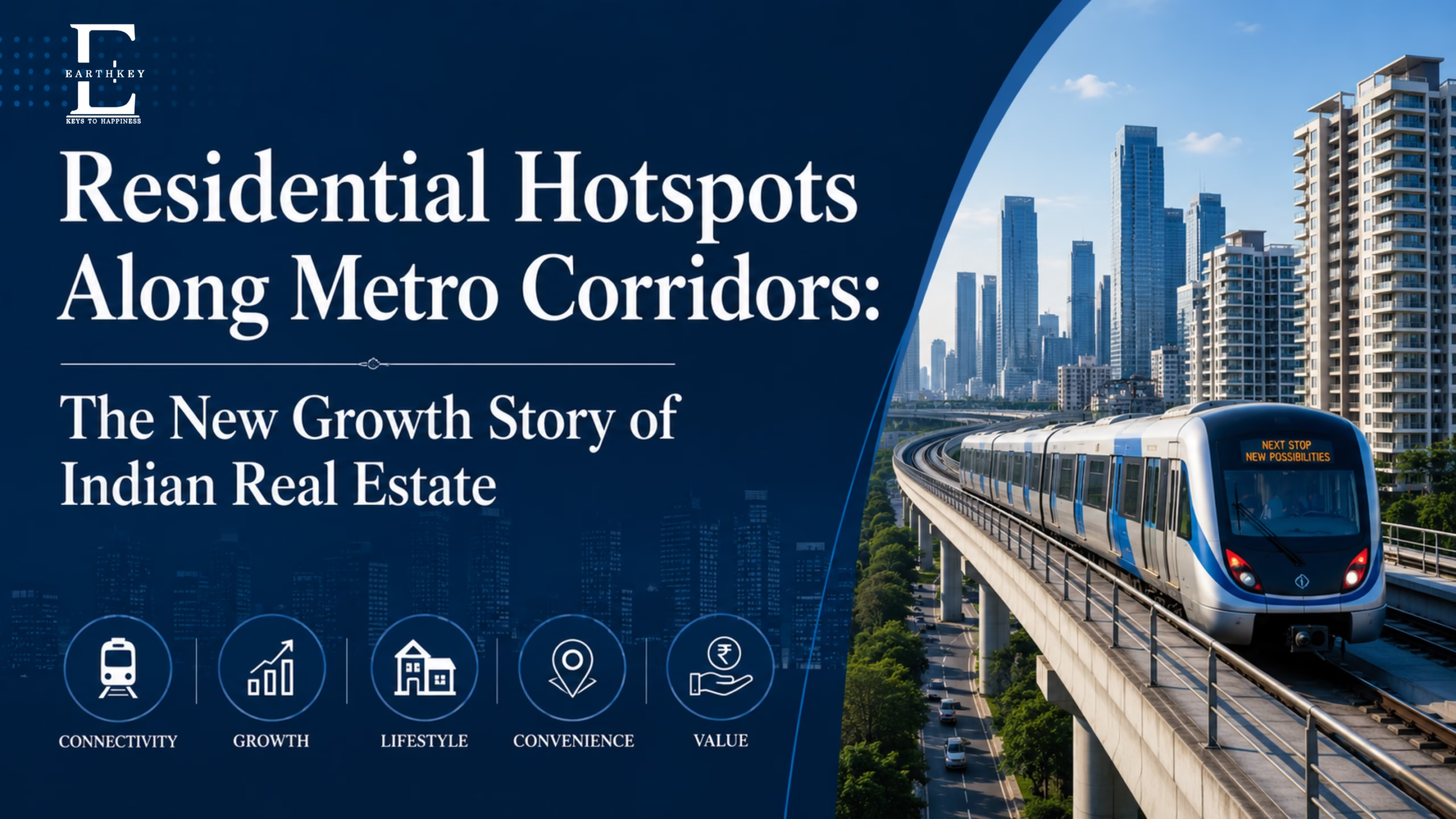
Residential Hotspots Along Metro Corridors
The way people choose homes in India has changed significantly over the last decade. Earlier, buyers focused mainly on city centers and established neighborhoods. Today, connectivity has become one of the most important factors in real estate decisions. Among all infrastructure developments, metro rail networks have emerged as game changers for residential real estate.
Metro corridors are not just improving transportation; they are creating entirely new residential destinations. Areas that were once considered distant from city centers are now becoming attractive locations for homebuyers and investors due to easy access, reduced travel times, and improved quality of life.
As metro networks continue to expand across major Indian cities, several residential hotspots are witnessing strong demand, rising property values, and increased developer activity.
Quick Info Table
| Category | Details |
|---|---|
| Focus Keyphrase | Residential Hotspots Along Metro Corridors |
| Industry | Real Estate |
| Target Audience | Homebuyers, Investors, NRIs |
| Investment Type | Residential Property |
| Key Growth Driver | Metro Connectivity |
| Top Markets | Delhi-NCR, Mumbai, Pune, Bengaluru, Hyderabad, Chennai |
| Market Trend | Rising Demand and Capital Appreciation |
Why Metro Corridors Are Transforming Real Estate
Modern homebuyers value convenience. Long commuting hours can impact both professional and personal life. Metro connectivity addresses this challenge by offering faster, reliable, and cost-effective transportation.
When a metro corridor becomes operational, it often triggers growth in the surrounding areas. New residential projects, commercial developments, schools, healthcare facilities, and retail centers start emerging, creating a complete urban ecosystem.
Some key benefits include:
- Reduced commuting time
- Better connectivity to employment hubs
- Improved social infrastructure
- Higher rental demand
- Strong long-term appreciation potential
- Enhanced lifestyle and convenience
This is why properties located near metro stations are increasingly becoming preferred choices among both end-users and investors.
1. New Gurugram and Dwarka Expressway Corridor
New Gurugram has become one of the most talked-about residential markets in India. The combination of metro expansion plans, improved road infrastructure, and the operational Dwarka Expressway has significantly enhanced the area’s appeal.
Sectors along the Dwarka Expressway are attracting professionals, families, and investors looking for modern housing options with excellent connectivity to Delhi, IGI Airport, and Gurugram’s major business districts.
Why It Is Growing
- Strong infrastructure development
- Premium residential projects
- Improved connectivity to Delhi
- Growing commercial ecosystem
- High future appreciation potential
For many buyers, this corridor represents the future of urban living in NCR.
2. Noida Expressway and Aqua Line Influence Zone
Noida has emerged as one of the fastest-growing residential destinations in North India. Metro connectivity through the Aqua Line has played a significant role in this transformation.
Areas along the Noida Expressway are witnessing increasing demand due to seamless connectivity, modern infrastructure, and the presence of educational institutions, IT parks, and business centers.
Major Advantages
- Excellent road and metro connectivity
- Growing employment opportunities
- Availability of modern housing
- Strong rental demand
- Attractive long-term investment prospects
Many homebuyers are choosing these locations as alternatives to more expensive city-center properties.
3. Pune's Hinjewadi Metro Corridor
Pune’s real estate market continues to benefit from its thriving IT sector. The upcoming metro connectivity between key business districts is expected to further strengthen residential demand in western Pune.
Localities such as Wakad, Baner, Balewadi, and Tathawade have witnessed growing interest from working professionals who want shorter commute times and better lifestyle amenities.
Key Growth Factors
- Large IT workforce
- Metro-driven connectivity improvements
- Expanding residential supply
- Rising rental market
- Strong end-user demand
As Pune continues to grow as a technology hub, metro-connected neighborhoods are expected to remain highly desirable.
4. Mumbai Metro Growth Corridors
Mumbai’s metro expansion is reshaping residential preferences across the metropolitan region.
Areas that were once considered far from major business districts are becoming more accessible. This improved connectivity has encouraged homebuyers to explore locations offering better affordability and larger living spaces.
What Drives Demand
- Faster daily commuting
- Better access to employment centers
- Improved affordability compared to central Mumbai
- Continuous infrastructure upgrades
- Strong rental potential
Metro connectivity is helping create new residential growth zones throughout the Mumbai Metropolitan Region.
5. Whitefield and North Bengaluru
Bengaluru’s expanding metro network is creating significant opportunities in several residential markets.
Whitefield, one of the city’s leading IT hubs, has experienced strong demand due to enhanced metro connectivity. Similarly, North Bengaluru is emerging as a preferred destination because of infrastructure development and proximity to employment centers.
Why Buyers Are Interested
- Strong technology sector presence
- Growing commercial developments
- Better connectivity
- Modern residential projects
- Long-term investment potential
The metro has become a major factor influencing housing decisions in Bengaluru.
6. Hyderabad's Metro-Connected Residential Zones
Hyderabad continues to attract both homebuyers and investors due to its balanced property prices and robust economic growth.
Metro connectivity has strengthened residential demand in several emerging neighborhoods. Improved transportation has made commuting easier while supporting the development of new residential and commercial projects.
Key Benefits
- Affordable housing options
- Expanding IT industry
- Reliable infrastructure
- Strong rental market
- Consistent demand growth
These factors make metro-connected locations in Hyderabad attractive for long-term investment.
7. Chennai's Emerging Metro Corridors
Chennai’s metro expansion is opening new opportunities across the city. Areas connected to upcoming metro routes are witnessing increased interest from both developers and buyers.
Improved accessibility is helping transform these locations into well-connected residential hubs with better lifestyle amenities and employment access.
Reasons for Growth
- Improved transportation infrastructure
- Access to IT and business districts
- Rising housing demand
- Better social infrastructure
- Strong future growth prospects
As connectivity improves, these neighborhoods are expected to see sustained residential development.
How to Choose the Right Metro-Connected Property
Before investing in a metro corridor, consider the following factors:
1. Distance from the Metro Station
Properties located within a short distance of metro stations generally enjoy higher demand and better appreciation.
2. Employment Opportunities
Areas near business districts, IT parks, and industrial zones often experience stronger housing demand.
3. Infrastructure Development
Evaluate upcoming roads, commercial centers, healthcare facilities, and educational institutions.
4. Developer Reputation
Projects from trusted developers often provide better quality, timely delivery, and stronger resale value.
5. Rental Demand
Metro-connected locations usually attract tenants seeking convenient transportation options.
The Future of Metro-Led Residential Growth
India’s urban population continues to grow, increasing the need for efficient transportation systems. Metro rail projects are expected to play a critical role in shaping future residential markets.
As more metro corridors become operational, new housing clusters will emerge around them. This trend is likely to create fresh opportunities for homebuyers seeking convenience and investors looking for long-term appreciation.
Cities that successfully combine metro connectivity with strong infrastructure development are expected to lead the next phase of real estate growth.
Conclusion
Metro connectivity has become one of the most powerful drivers of residential real estate in India. From Gurugram and Noida to Pune, Mumbai, Bengaluru, Hyderabad, and Chennai, metro corridors are creating new residential hotspots that offer better connectivity, enhanced lifestyle, and promising investment potential.
For homebuyers, these locations provide convenience and improved quality of life. For investors, they offer opportunities for capital appreciation and rental income. As India’s metro network expands further, residential hotspots along metro corridors are expected to remain among the most attractive real estate destinations in the coming years.
Frequently Asked Questions (FAQs)
Metro-connected areas offer faster commuting, better accessibility, improved infrastructure, and enhanced convenience, making them attractive residential destinations.
In many cases, properties located close to metro stations experience stronger demand and better long-term value growth compared to less connected locations.
Yes. Professionals and families often prefer metro-connected homes because of reduced travel time, leading to healthy rental demand.
Investing in emerging metro corridors can provide long-term benefits if supported by strong infrastructure development and employment opportunities.
Delhi-NCR, Mumbai, Pune, Bengaluru, Hyderabad, and Chennai are currently among the leading cities benefiting from metro-led residential growth.
Buyers should evaluate connectivity, developer reputation, infrastructure plans, rental demand, and future growth prospects before making an investment decision.