
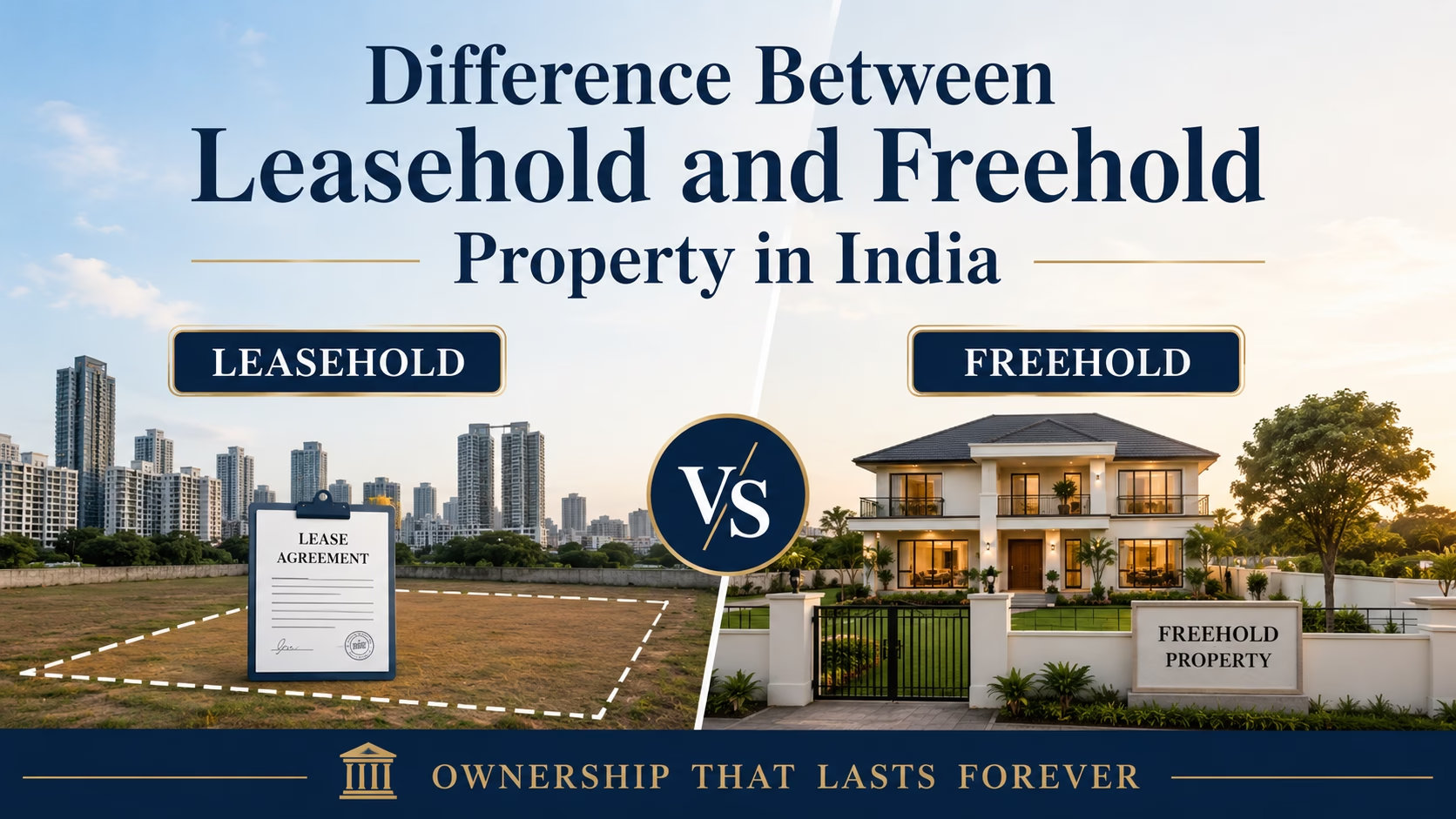
Difference Between Leasehold and Freehold Property
Buying a property is one of the biggest financial decisions in life. Whether you are purchasing a home for your family or investing in real estate for future returns, understanding the type of ownership is extremely important. One of the most common questions among buyers is the difference between leasehold and freehold property.
Many people focus only on location, price, and amenities while ignoring the legal ownership structure of the property. However, ownership type directly affects your rights, resale value, property transfer process, and long-term investment benefits.
In this blog, we will explain leasehold and freehold property in simple language so you can make a smarter and more confident real estate decision.
Quick Info Table: Leasehold vs Freehold Property
| Feature | Leasehold Property | Freehold Property |
|---|---|---|
| Ownership Type | Ownership for a limited period | Permanent ownership |
| Land Ownership | Land belongs to authority or owner | Buyer owns land and property |
| Duration | Usually 30 to 99 years | Lifetime ownership |
| Resale Value | Comparatively lower | Higher market value |
| Property Transfer | May require approval | Easy transfer process |
| Loan Approval | Depends on lease period | Easier loan approval |
| Modification Rights | Limited permissions required | Full freedom |
| Renewal Requirement | Lease renewal needed | No renewal needed |
| Investment Potential | Moderate | Strong long-term investment |
| Legal Security | Limited compared to freehold | More secure ownership |
What is Leasehold Property?
A leasehold property means the buyer gets ownership rights for a fixed period decided in the lease agreement. The ownership may last for 30 years, 60 years, 90 years, or even 99 years depending on the property terms.
In this type of ownership, the land remains under the control of the government authority, development authority, or original landowner. The buyer only gets the right to use the property during the lease period.
Once the lease duration ends, the ownership rights may return to the original landowner unless the lease is renewed.
Leasehold properties are commonly found in government-developed residential societies, housing boards, and some urban development projects.
Advantages of Leasehold Property
1. Lower Purchase Cost
Leasehold properties are generally cheaper than freehold properties in the same area. This makes them attractive for buyers with limited budgets.
2. Good Locations at Affordable Prices
Many leasehold properties are located in prime city areas where freehold properties are very expensive
3. Suitable for Short-Term Ownership
People who are not planning to hold a property for a very long period may find leasehold properties suitable.
4. Lower Initial Investment
Since the ownership rights are limited, the overall investment amount is often lower compared to freehold property.
Disadvantages of Leasehold Property
1. Limited Ownership Rights
The buyer does not own the land permanently. Ownership exists only for the lease period.
2. Lower Resale Value
Properties with shorter remaining lease duration may attract fewer buyers.
3. Renewal Complications
Lease renewal can involve additional costs and legal procedures.
4. Restrictions on Construction
Some authorities may require approval before making structural changes or renovations.
5. Loan Approval Challenges
Banks may be cautious while approving loans for properties with limited lease years remaining.
What is Freehold Property?
A freehold property gives complete ownership rights to the buyer without any time limitation. The buyer owns both the building and the land permanently.
This is considered the most secure and preferred type of property ownership in India. The owner has complete freedom to sell, transfer, renovate, lease, or inherit the property according to applicable laws.
Freehold ownership is common in independent houses, residential plots, villas, builder floors, and many modern residential developments.
Advantages of Freehold Property
1. Complete Ownership Rights
The owner gets permanent ownership of both land and property.
2. Better Resale Value
Freehold properties usually have higher demand and stronger appreciation potential.
3. Easy Property Transfer
Selling or transferring ownership is much simpler compared to leasehold property.
4. Easier Home Loan Approval
Banks and financial institutions generally prefer freehold properties because they involve lower legal risk.
5. Freedom to Modify Property
Owners can renovate or reconstruct the property according to local building rules.
6. Strong Long-Term Investment
Freehold properties are considered more secure for long-term wealth creation.
Disadvantages of Freehold Property
1. Higher Property Cost
Freehold properties are usually more expensive than leasehold properties.
2. Higher Financial Responsibility
The owner is fully responsible for taxes, maintenance, and legal matters related to the property.
Difference Between Leasehold and Freehold Property Explained
The major difference between leasehold and freehold property is ownership duration and land rights.
In leasehold ownership:
- The buyer gets property rights only for a limited time.
- Land ownership remains with another authority or landowner.
- Lease renewal may be required in future.
In freehold ownership:
- The buyer gets complete ownership forever.
- Both land and building belong to the owner.
- No lease renewal is required.
From an investment perspective, freehold properties are generally considered more beneficial because they provide long-term ownership security and better appreciation potential.
Which Property Type is Better?
The choice depends on your financial goals, budget, and investment plans.
Leasehold Property is Better If:
- You want a lower-budget property.
- You prefer prime city locations at affordable prices.
- You are planning short-term ownership.
Freehold Property is Better If:
- You want permanent ownership rights.
- You are looking for long-term investment.
- You want better resale opportunities.
- You want complete control over the property.
Most buyers and investors prefer freehold property because of stronger legal ownership and higher future value.
Can Leasehold Property be Converted into Freehold?
Yes, in many cases, leasehold properties can be converted into freehold ownership after completing legal formalities and paying conversion charges.
The process usually depends on:
- Local authority rules
- Property category
- Pending dues or legal clearances
Before purchasing any leasehold property, it is always advisable to verify whether freehold conversion is allowed.
Important Documents to Check Before Buying Property
Before finalizing any property purchase, buyers should carefully verify:
- Sale deed
- Lease deed
- Property title documents
- Encumbrance certificate
- Property tax receipts
- Occupancy certificate
- Approved building plan
- RERA registration details
Checking these documents helps avoid future legal complications.
Conclusion
Understanding the difference between leasehold and freehold property is essential before investing in real estate. Both ownership types have their own advantages and limitations.
Leasehold properties may offer affordability and access to prime locations, while freehold properties provide complete ownership rights, better investment security, and stronger resale value.
For long-term investment and ownership stability, freehold property is generally considered the better option. However, the right choice ultimately depends on your budget, financial goals, and property requirements.
Always verify legal documents and understand ownership terms carefully before making a property purchase decision.
FAQ
Leasehold property provides ownership for a fixed period, while freehold property gives permanent ownership rights.
Yes, freehold properties are generally more expensive because they offer complete ownership rights.
Yes, leasehold properties can be sold during the lease period according to the agreement terms.
Freehold properties usually have better resale value compared to leasehold properties.
Yes, banks may provide loans, but approval depends on the remaining lease period and property conditions.
Yes, freehold property is considered a strong long-term real estate investment because of permanent ownership and better appreciation potential.